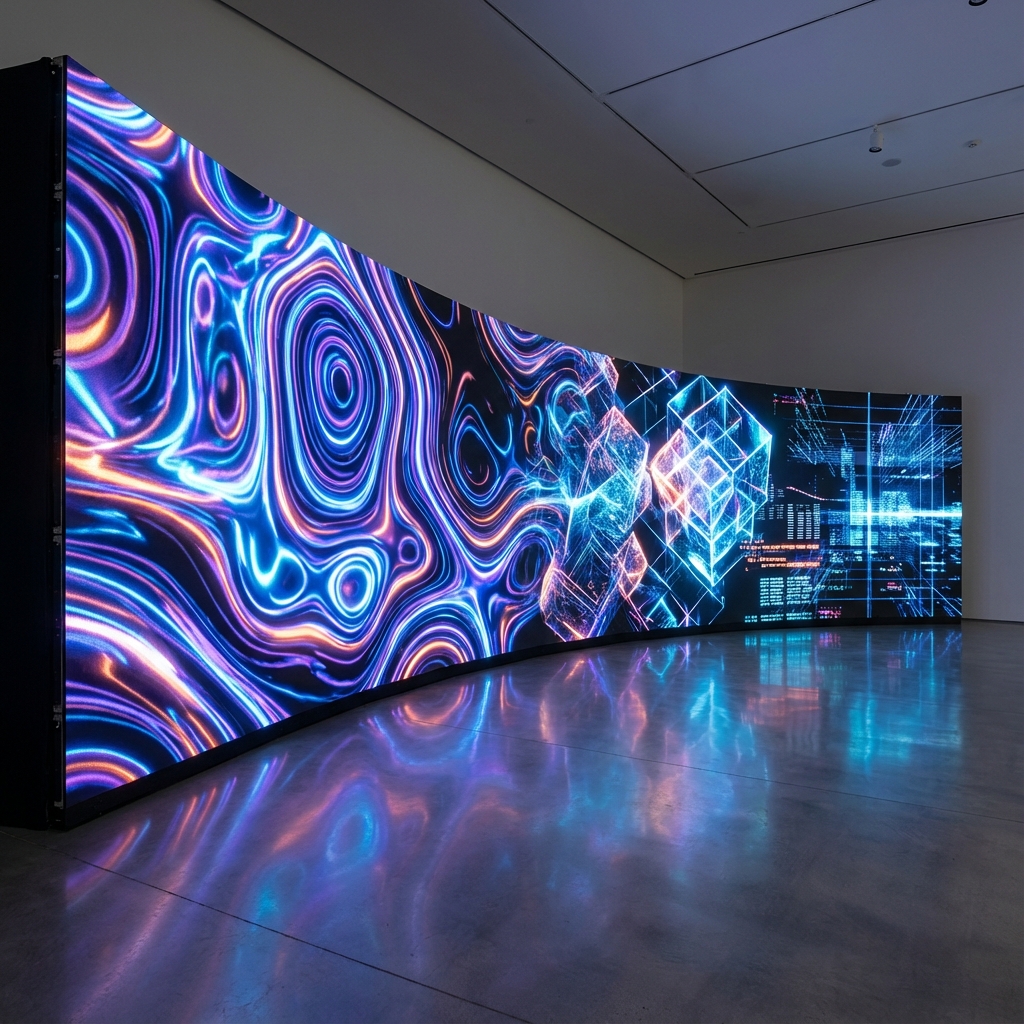
Generative Design: Co-Creating with Algorithms
Stop drawing; start defining. In traditional design, you draw a shape and test it. In Generative Design, you state the problem, and the computer draws the solution.
In short: This inversion of the creative process is the biggest shift in engineering since CAD.
Evolution by Algorithms
To understand Generative Design, we must understand that it is fundamentally different from CAD (Computer-Aided Design).
- CAD is digital drafting. The computer records the lines you draw.
- Generative Design is digital exploration. The computer draws the lines for you.
How It Works: Mimicking Evolution
Generative algorithms are inspired by biological evolution.
- Input: The engineer inputs the "Gene" (Design Goals + Constraints).
- Goal: Minimize Mass.
- Constraint: Must withstand 5000N of force on the Y-axis.
- Constraint: Must fit within this specific bounding box.
- Material: Aerospace Grade Titanium (Ti-6Al-4V).
- Iterate: The computer generates 10,000 random variations.
- Test: It runs a physics simulation (Finite Element Analysis) on each one.
- Cull: It deletes the weak designs and breeds the strong ones.
- Refine: After 100 generations, it presents the "fittest" solution.
The result is almost always organic, looking more like a alien bone structure than a machined part.
Sustainability Through Efficiency
The aesthetic is cool, but the driver is economics and ecology.
Light-weighting for Aerospace
In aerospace, every kilogram saved reduces fuel costs by ~$3,000 per year.
- Topology Optimization: Generative design removes material from areas that are not under stress.
- Result: Parts that are 40-60% lighter but just as strong as their solid predecessors.
Case Study: The Airbus Partition
Airbus used generative design to recreate the partition that separates the galley from the passenger cabin.
- Old Design: Solid slab of honeycomb composite.
- New Design: Bionic web structure mimicking slime mold.
- Impact: 45% lighter. Across the A320 fleet, this saves 465,000 metric tons of CO2 emissions per year.
Part Consolidation
Traditional manufacturing requires assembling simple shapes. Generative design allows for Complexity for Free. We can print a fuel nozzle that used to be 20 welded parts as a single unit.
- Less Assembly: Lower labor costs.
- Less Failure: No welds to crack.
- Better Inventory: Stock 1 SKU instead of 20.
The New Role of the Designer
Does this replace the engineer? No. It elevates them.
From Drafter to Curator
The engineer stops being a "geometry creator" and becomes a "problem framer." If you ask the wrong question (input the wrong constraints), the AI will generate the wrong answer perfectly. The skill of the future is knowing how to set up the boundary conditions for the AI.
The "Co-Pilot" Model
The workflow is collaborative:
- Human defines the problem.
- AI generates 100 solutions.
- Human uses intuition to select the best 3.
- Human refines the aesthetics.
- AI validates the final physics.
Future Trends (2026-2030)
Multi-Physics Simulation
Current tools mostly optimize for structural loads. Future tools will optimize for structure, fluid dynamics, and thermodynamics simultaneously. Imagine a heat exchanger that is structural, acts as a coolant channel, and is aerodynamic, all optimized in one pass.
Generative Urban Planning
These algorithms are scaling up. Cities are starting to use generative design to plan neighborhoods.
- Goals: Maximize sunlight for every apartment, minimize wind tunnels, optimize walking paths.
- Constraints: Zoning laws, budget, terrain.
Conclusion
Generative Design is nature's engineering code, finally deciphered by silicon. It allows us to build a world that is lighter, stronger, and more efficient.
At Nexa-Sphere, we apply these principles to systems and code efficiency, embracing the generative mindset across all disciplines.